Conrad Table Top Intaglio Presses

E-9

E-12
E-15

E-18

E-24

E-31

E-37

Accessories
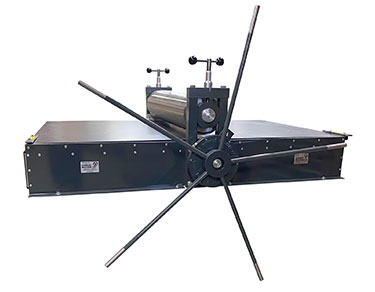
Conrad Machine tabletop etching presses are built for printmakers who need professional intaglio performance in a compact, portable format. Unlike hobby or student-grade tabletop presses, Conrad tabletop presses are truely professional presses, engineered with the same focus on strength, precision, and long-term reliability as our floor model line.
Whether you are a novice printmaker working from a home studio, an artist who needs a portable press for workshops, or an instructor building flexibility into a university classroom, Conrad Press offers tabletop etching presses designed to fit your space without sacrificing performance. Their portable size makes them easier to move, store, and integrate into smaller studios while still delivering the smooth operation and even pressure serious printmakers expect with oversized rolls bigger than other companies’ floor model presses.
Engineered to handle classroom use, workshop travel, and daily studio printing, Conrad tabletop etching presses provide professional results wherever you print. Explore our tabletop etching press lineup to see why Conrad Presses are the only true professional tabletop presses for artists who need portability, precision, and durability in one machine.
Explore the Lineup.


Why Conrad is the best
place to buy a Press.
Easy to Use
Press Designs that Just Make Sense.
Conrad presses are designed to eliminate distraction, so you can focus on your prints.

Reliable Performance
Built for Classroom & Professional Studios.
Built for precise printing with the most durable, heavy duty materials in the world.

Customization
Build the Perfect Press for You.
We offer the most press options, so you can build your own custom press.

Help me choose.
Answers to common questions to find the best Conrad Press for you.
Learn more
Switch to Conrad.
Bed plates
Solid beds = More Pressure
Metal beds are tested to be more stable and precise than other materials.

Rolls
Bigger rolls for smoother pressure.
Larger rolls with thicker walls help climb onto plates while maintaining pressure.

Pressure System
Springs eliminate backlash.
A spring balance pressure system is more accurate than direct mounted systems.

What Are Tabletop Etching Presses?
Tabletop etching presses are compact printmaking presses designed to provide the pressure needed for intaglio printing while fitting on a sturdy table, bench, or studio stand. Unlike large floor model presses, tabletop etching presses are smaller, more portable, and easier to place in limited studio spaces. They are used by printmakers who want the capabilities of an etching press without needing a large dedicated press area.
At their core, tabletop etching presses perform the same basic function as larger intaglio presses. They transfer ink from a plate onto paper by applying controlled pressure through a roller system. The artist places an inked plate on the press bed, lays dampened paper over the plate, covers the setup with felt blankets, and runs everything through the rollers. The pressure pushes the paper into the recessed lines of the plate, pulling ink from those lines and creating the final print.
Tabletop etching presses are especially useful for home studios, classrooms, workshops, small print shops, and artists who need a more flexible printing setup. A well-made tabletop press can be a serious printmaking tool, not just a beginner option. When built with strong materials, accurate rollers, and reliable pressure controls, a tabletop etching press can produce clean, detailed, professional-quality prints.
The Purpose of a Tabletop Etching Press
The purpose of a tabletop etching press is to make printmaking more accessible in spaces where a full-size floor press may not be practical. Intaglio printmaking requires significant pressure, especially when printing etched or engraved plates. Hand pressure alone is not enough to push paper deeply into the plate’s recessed marks.
In educational settings, tabletop presses are useful because they allow more students to work in printmaking without requiring a large press room. In home studios, they give artists the ability to print on demand without relying on shared studio access.
How Tabletop Etching Presses Work
A tabletop etching press usually consists of a frame, an upper roller, a lower roller, a moving bed, pressure adjustment screws, bearings, and a drive mechanism such as a hand crank or wheel. The press bed carries the printing plate and paper through the rollers. The rollers apply pressure as the bed moves through the press.
To use a tabletop etching press, the artist first prepares and inks the plate. In intaglio printing, ink is pushed into the lines or textures of the plate and then wiped from the surface. Dampened paper is placed over the plate because moist paper is more flexible and can press into the recessed areas more effectively. Felt blankets are placed over the paper to cushion the pressure and help force the paper into the plate.
The artist then turns the handle or drive mechanism, moving the bed through the rollers. As the plate and paper pass through, the pressure transfers the ink to the paper. After you pull the print, the blankets are lifted and the paper is carefully pulled from the plate to reveal the print.
Printmaking Uses for Tabletop Etching Presses
Tabletop etching presses are most commonly used for intaglio techniques. These include etching, drypoint, engraving, aquatint, mezzotint, and collagraph. Each of these methods relies on ink being held below the surface of the plate or within textured areas.
In etching, acid is used to bite lines into a metal plate. A tabletop etching press provides the pressure needed to transfer those fine lines to paper. In drypoint, the artist scratches directly into a plate, creating a burr that holds ink and prints as a soft, rich line. The press must apply enough pressure to capture that delicate mark without crushing it.
Aquatint uses a textured surface to create tonal areas, and a consistent press is important for printing smooth values. Collagraph printing uses textured plates made from layered materials, and tabletop presses are useful for transferring those varied textures. Monotype printing can also be done on a tabletop etching press. In monotype, the artist creates an image with ink on a smooth plate and prints it once, producing a unique image.
Some printmakers also use tabletop etching presses for relief printing, such as linocut or woodcut. Relief printing does not require as much pressure as intaglio, so pressure must be adjusted carefully. Still, a tabletop press can provide clean, even contact for relief work, especially when printing larger blocks or consistent editions.
Materials Used in Tabletop Etching Presses
The quality of a tabletop etching press depends heavily on the materials used to build it. A press may be small, but it still needs to withstand pressure. The frame is usually made from steel, aluminum, or another rigid material. A strong frame is important because flexing can reduce pressure consistency and cause uneven prints.
Rollers are one of the most important components. Professional tabletop etching presses often use steel rollers because steel provides strength, smoothness, and durability. Rollers need to remain round, straight, and properly aligned. If the rollers are poorly made or too light, the press may struggle to produce even pressure.
The bed may be made from steel, aluminum, composite material, or other flat, stable surfaces. A good bed should resist warping and remain smooth through repeated use. The bed must support the plate, paper, and blankets as they move through the press.
Bearings, gears, pressure screws, and handles are also important. Smooth bearings help the press turn easily. Accurate pressure screws allow the artist to adjust pressure for different plates, papers, and techniques. A comfortable drive system makes the press easier to operate, especially when printing under higher pressure.
Advantages of Tabletop Etching Presses
The biggest advantage of tabletop etching presses is their compact size. They allow artists to print in spaces that cannot accommodate a large floor press. This makes them ideal for apartments, home studios, classrooms, temporary studios, and workshop settings.
Portability is another major advantage. While high-quality tabletop presses can still be heavy, they are generally easier to move than floor model presses. This makes them useful for traveling instructors, schools with flexible classrooms, or artists who need to rearrange their workspace.
Tabletop etching presses are also more approachable for beginners. They allow new printmakers to learn the fundamentals of press setup, pressure adjustment, plate inking, paper dampening, blanket use, and print pulling on a manageable scale. At the same time, a professional tabletop press can still serve experienced artists who work small to medium-sized plates.
Cost can be another benefit. Tabletop presses are often less expensive than full-size floor presses, making them a practical option for artists building a studio gradually. They also require less floor space and may not need the same level of installation or moving equipment as larger presses.
Printing Styles and Techniques
Tabletop etching presses support a wide range of printing styles. For fine line etching, they can capture delicate marks and crisp detail when properly adjusted. For drypoint, they can print soft, velvety lines created by the burr of the plate. For aquatint, they can help produce tonal areas, atmospheric shading, and rich darks.
In collagraph printing, tabletop presses can capture texture from built-up plates. Artists may use cardboard, fabric, acrylic medium, paper, sand, or other materials to create surfaces that print with depth and variation. Since collagraph plates can be uneven, pressure control is important.
Monotype artists use tabletop presses to create painterly, expressive prints. Ink can be rolled, brushed, wiped, or scraped on a plate before printing. Because the press applies even pressure, it can transfer subtle textures and marks that may be difficult to achieve by hand.
Relief printers may also use tabletop presses for linocuts and woodcuts. The press can help create clean, consistent impressions, especially when printing editions. However, relief printing usually requires less pressure than etching, so careful adjustment is necessary to avoid over-compressing the block or paper.
What to Look for in a Tabletop Etching Press
When choosing a tabletop etching press, look for strong construction first. A rigid frame, quality rollers, smooth bearings, and a stable bed are essential. A press that looks convenient but flexes under pressure may not deliver good results.
Pressure control is also important. The press should allow smooth, repeatable pressure adjustments. If pressure is difficult to set or inconsistent from one side to the other, printing will become frustrating.
Bed size should match the kind of work you plan to make. Remember that the paper is usually larger than the plate, so choose a press with enough bed area for both the plate and margins. Also consider where the press will sit. A tabletop press should be placed on a strong, stable bench that will not wobble during use.
Portability should be balanced with performance. A very light press may be easy to move, but it may not have the strength needed for serious intaglio work. The best tabletop etching presses combine manageable size with professional-quality construction.
Maintenance and Care
Tabletop etching presses should be cleaned and maintained regularly. The bed and rollers should be kept free of ink, grit, moisture, and paper fibers. Moving parts should be inspected and lubricated as recommended. Pressure screws should turn smoothly and should never be forced.
Felt blankets should be kept clean and dry. Dirty blankets can transfer marks to prints, while compressed or worn blankets can reduce print quality. If the press begins to feel rough, noisy, uneven, or difficult to turn, it should be checked before further use.
Proper care helps a tabletop etching press last for many years. Even a small press is a precision tool, and maintaining it protects both the equipment and the quality of the prints.
Conclusion
Tabletop etching presses are compact, versatile presses that make intaglio and other press-based printmaking techniques accessible to more artists and studios. They provide the pressure needed for etching, drypoint, aquatint, collagraph, monotype, and some relief printing while taking up far less space than a floor model press.
A good tabletop etching press should be strong, stable, smooth, and easy to adjust. It should offer enough pressure for detailed printing while remaining practical for smaller studios, classrooms, workshops, and artists who need portability. For printmakers who want professional results in a compact format, a tabletop etching press can be one of the most valuable tools in the studio.
Frequently Asked Questions
What is a tabletop etching press used for?
A tabletop etching press is used to print intaglio plates, including etching, drypoint, aquatint, engraving, and collagraph. It can also be used for monotype and some relief printing when the pressure is adjusted properly.
Are tabletop etching presses good for beginners?
Yes, tabletop etching presses are a great option for beginners because they are smaller, more approachable, and easier to fit into a home studio or classroom. A quality tabletop press allows new printmakers to learn proper inking, wiping, paper preparation, blanket setup, and pressure control.
Can a tabletop etching press make professional-quality prints?
Yes, a well-built tabletop etching press can produce professional-quality prints if it has strong construction, smooth rollers, a flat bed, and accurate pressure adjustment. The key is choosing a press designed for real intaglio pressure rather than a lightweight hobby press.
What should I look for when buying a tabletop etching press?
Look for a rigid frame, precision rollers, smooth bearings, a stable bed, and reliable pressure controls. You should also consider bed size, portability, and whether the press can handle the plate and paper sizes you plan to use.
Do tabletop etching presses need special blankets?
Yes, tabletop etching presses typically use felt printmaking blankets to help distribute pressure and push damp paper into the recessed lines of the plate. Using the right blankets improves detail, consistency, and overall print quality.
