
“My Conrad hot plate has worked flawlessly in my studio for over a decade. It’s been a pleasure to use.”
-Lee Widener,
Artist/ Printmaker
Take a closer look.
Conrad Machine Co. is proud to offer the best hotplates for professional printmakers and their studios in several different sizes. Whether you are professional printmaker, manage a college studio, or are new to printmaking, we have a hot plate that is perfect for your studio.
Conrad Printmaking Hot Plate Design
Even. Controlled. Heat.
The Conrad printmaking hot plates are designed to bring consistent, controlled heat to your studio. Whether you’re warming inks, prepping plates, or maintaining the right working temperature, our hot plates are built to perform for years to come.
Available in a range of sizes, there’s an option to fit everything from small personal setups to larger studio workflows. Each unit is constructed from high-quality materials, designed to heat evenly across the surface and hold a steady temperature without hot spots or fluctuations.
This consistent heat makes a real difference. It helps inks move more smoothly, improves plate preparation, and gives you better control throughout the printing process.
Economy Printmaking Hot Plate (10.75″ x 20″)
This small hot plate is an economical choice for printmakers who are on a budget. It is constructed from a commercially manufactured griddle that is machined and mounted with an aluminum top for an obstruction-free heating surface.
– 10.75″ x 20″ Hot Plate – 110 V single phase
– 1500 W with on/off light indicator
– Variable thermostat
– 80-400 degrees Fahrenheit
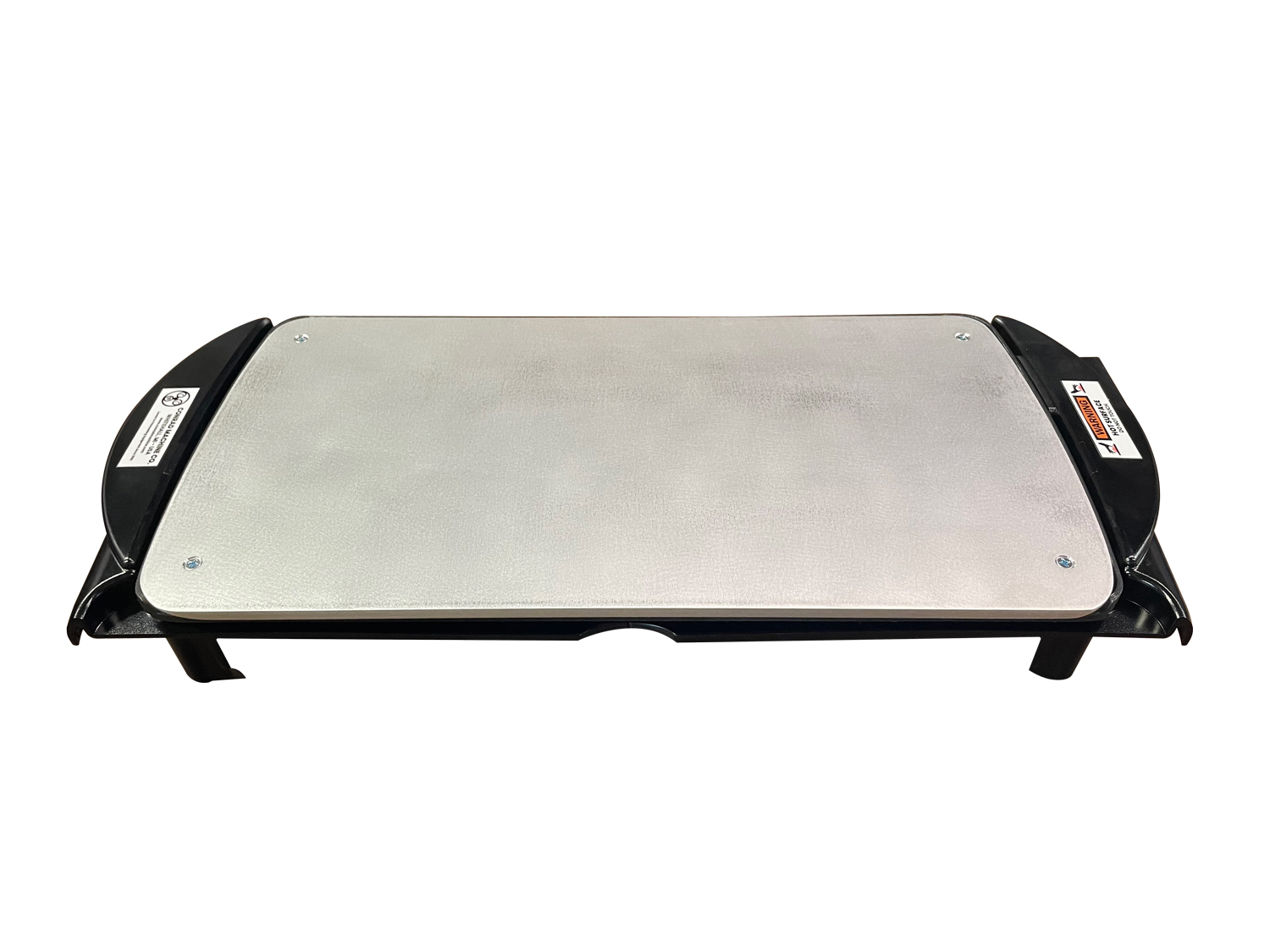
Conrad Professional Printmaking Hot Plate (18″ x 24″)
This medium sized hot plate is the best hotplate for printmakers who have limited space but still need a professional, consistent heating surface for their inking process.
– 18″ x 27.5″ Hot Plate – 110 V single phase
– 2250W variable thermostat
– 80 to 450 degrees Fahrenheit
– 1/2″ thick aluminum top plate
Conrad Professional Printmaking Hot Plate (27.5″ x 36″)
This large hot plate is the perfect choice for professional printmakers and studios that need a larger surface for either big plates or multiple students to use at the same time.
– 27.5″ x 36″ Hot Plate – 220 V single phase
– 3500 W with on/off power indicator light
– Variable thermostat
– 80 to 450 degrees Fahrenheit
– 1/2″ thick aluminum top plate
Hot Plate Care & Maintenance
Stay Clean. Stay Safe.
Keeping your Conrad printmaking hot plate in good condition is simple, and a little routine care will help it perform reliably for years.
Clean after Use
After each session, wipe down the surface once it has cooled. Removing ink, solvents, or residue prevents buildup and keeps the plate heating evenly. A clean surface also helps avoid contamination when working with different inks or materials.
Check Controls
Periodically check the temperature controls to make sure they are operating smoothly and accurately. If anything feels loose or inconsistent, it’s best to address it early to maintain precise heat control.
Check Wiring
Take a quick look at the power cord and connections from time to time. Make sure everything is intact and free from wear or damage. Keeping the electrical components in good condition ensures safe and reliable operation.
Don’t Overheat
Use the hot plate within its intended temperature range. Running it at excessively high heat for long periods can shorten its lifespan and affect performance. Controlled, steady heat will give you the best results while protecting the unit.

Conrad Printmaking Hot Plate Specifications
Get the Details.
| Hot Plate Specifications | Surface Dimensions | Voltage / Wattage | Temperature Range | Weight |
| Economy Hot Plate: | 12″ x 21.5″ | 110v / 1500w | 80-400° Fahrenheit | 20 lbs. |
| Conrad Professional Hot Plate | 18″ x 24″ | 110v / 2250w / 15amp | 100-550° Fahrenheit | 92 lbs. |
| Conrad Professional Hot Plate | 27.5″ x 36″ | 220v / 4000w / 20amp | 100-550° Fahrenheit | 150 lbs. |
Conrad Hot Plate Safety
Print Safe.
Using a professional Conrad hot plate for inking plates requires attention to safety. Here are a few safety tips that you should implement in your studio.
- Avoid Overheating: Excess heat can damage plates or ink
- Use Protective Gear: Gloves may be needed when handling hot materials
- Monitor Temperature: Keep heat at a controlled level
- Ensure Ventilation: Prevent buildup of fumes from heated inks
- Turn off: Make sure to turn off hot plate when not in use
Get a Conrad Printmaking Hot Plate
There’s never been
a better time to print.
Take control of your inking process with a Conrad printmaking hot plate. Whether you’re warming inks, prepping plates, or keeping everything at the perfect working temperature, it helps you achieve smoother application and more consistent results every time.
Upgrade your workflow with reliable, even heat you can count on.
Shop Printmaking Hot Plates NowWhat Is a Printmaking Hot Plate?
A printmaking hot plate is a controlled heating surface used in printmaking studios to warm plates, inks, and tools during the printing process. It is especially important in intaglio printmaking (such as etching, engraving, and drypoint), where temperature can significantly affect how ink behaves and how easily it can be applied and wiped.
Unlike kitchen hot plates, printmaking hot plates are designed for low, consistent heat and are often built with safety features suited for studio environments. By gently warming materials, they improve ink flow, reduce physical effort, and help produce cleaner, more consistent prints.
The Purpose of a Printmaking Hot Plate
The primary purpose of a printmaking hot plate is to control temperature to improve the handling of ink and plates. Temperature plays a key role in how ink spreads, adheres, and wipes.
Key functions include:
- Softening Ink: Makes stiff inks easier to work with
- Improving Ink Flow: Helps ink spread evenly across a plate
- Easier Wiping: Reduces resistance when removing excess ink
- Consistent Results: Maintains uniform working conditions
By warming materials, the hot plate allows for greater control and efficiency in the printing process.
Materials Used in Printmaking Hot Plates
Printmaking hot plates are constructed from durable, heat-resistant materials:
Surface Material
Conrad printmaking hot plates are topped with a precisely flat 1/2″ thick plate of aluminum. The smooth, flat surface conducts heat evenly and helps warm the ink for wiping and distribution.
Heating Element
- Internal electric elements that provide consistent, adjustable heat
Temperature Controls
- Adjustable dials or digital controls for precise temperature management
Housing
Conrad hot plates are built from heavy sheet metal and lined with insulating materials, so the outside of the housing does not get too hot while the top is heating up.
How a Printmaking Hot Plate Is Used
Using a printmaking hot plate is straightforward:
1. Setting the Temperature
The hot plate is turned on and set to a low or moderate temperature.
2. Warming the Plate
A metal plate is placed on the surface to gently heat it.
3. Applying Ink
Ink is applied to the warmed plate, spreading more easily. You can also apply the ink directly to a slab or the hot plate itself to warm the ink before inking the plate.
4. Wiping the Plate
The softened ink is easier to wipe with tools like tarlatan.
5. Printing
Now that your plate is inked, you are ready to pull a print!
Printing Styles and Techniques That Use Hot Plates
Hot plates are used in several printmaking techniques:
Intaglio (Etching, Engraving, Drypoint)
The most common use. Warm plates allow ink to be applied in the grooves of the image and wiped more easily.
Aquatint
Helps achieve smooth tonal transitions by improving ink flow.
Monotype
Warming the plate can create softer, more fluid ink effects.
Experimental Printmaking
Artists use heat to manipulate ink texture and behavior.
Advantages of Using a Printmaking Hot Plate
Printmaking hot plates offer several important benefits:
- Improved Ink Handling: Makes thick inks easier to work with
- Reduced Physical Effort: Easier wiping and application
- Enhanced Print Quality: Promotes even ink distribution
- Time Efficiency: Speeds up the printing process
- Versatility: Can be used with various materials and techniques
These advantages make hot plates a valuable tool in many studios.
Differences Between Warm and Cold Printing
Key differences include:
- Ink Viscosity: Warm ink flows more easily; cold ink is thicker
- Ease of Wiping: Warm plates require less effort
- Detail Control: Warm plates allow smoother tonal transitions
- Working Time: Heat can slightly reduce working time if ink dries faster
Understanding these differences helps you choose the which printmaking approach will work best for your plate based on the tones and textures you want to bring out in your print.
Why Printmaking Hot Plates Matter
Printmaking hot plates are important because they enhance the control and efficiency of the printing process. By improving how ink behaves, they allow artists to achieve better results with less effort.
They also make traditional techniques more accessible, especially for beginners who may struggle with stiff inks.
Conclusion
A printmaking hot plate is a valuable tool used to warm plates and inks, improving their handling and performance during printing. Particularly important in intaglio techniques, it helps soften ink, ease wiping, and produce more consistent results.
Understanding how to use and maintain your hot plate properly can significantly improve both your printing process and the quality of your final print.
Frequently Asked Questions
What is a printmaking hot plate used for?
A printmaking hotplate is used to warm plates and ink to improve the inking process and print quality.
Which techniques benefit most from a hot plate?
Intaglio techniques like etching and drypoint benefit the most from using a a printmaking hotplate.
Can you overheat a printmaking plate?
Yes, excessive heat can damage materials, so controlled temperatures are important.
Do all printmakers use hot plates?
No, not all printmakers use hot plates in their printing process, as this is based on preference and printing techniques.
Is a printmaking hot plate different from a regular hot plate?
Yes, a printmaking hotplate has a thick ground, flat heating surface to deliver controlled, even heat suitable for printmaking materials whereas a regular hot plate typically has a thick heating surface designed for high temperatures.
