
“Conrad Press felt blankets are an indispensable part of my studio. I can’t live without them “
-Laurie Torres,
Artist/ Printmaker
Take a closer look.
Conrad Press offers the best printmaking felt blankets designed to deliver consistent pressure, smooth transfers, and reliable results across all types of printmaking. Whether you’re working in intaglio, relief, or monotype, the right blanket setup plays a critical role in how your prints turn out.

Conrad offers a carefully selected range of blankets, including sizing catcher, cushion, and pusher blankets, so you can build the ideal combination for your process. Each layer serves a purpose—helping distribute pressure evenly, protect your plate and paper, and ensure a clean, detailed impression.
Made from high-quality felt/wool materials, our blankets are made for durability and long-term performance. They maintain their structure and resilience over time, providing consistent results from the first print to the last.
Conrad Felt Blanket Selection
So Clean. So Smooth.
We offer a full selection of printmaking blankets that you can get individually or in a complete set (sizing catcher, cushion, & pusher).
Each blanket in a printmaking setup has a specific job. When used together, they create the right balance of pressure, protection, and flexibility for a clean, consistent print.

Sizing Catcher Felt Blankets — Bottom Layer (Closest to the Plate)
The sizing catcher is the thin, tight-weave blanket that sits directly on top of your paper and plate. Its main job is to catch excess sizing, moisture, and small debris, helping protect the other blankets and keep your setup clean.
Because it’s smooth, it also helps maintain sharp detail without adding too much compression.
Cushion Felt Blankets — Middle Layer
The cushion blanket is softer and thicker, designed to absorb and distribute pressure evenly across the plate. It acts as a buffer, helping the press apply consistent force without creating uneven spots or harsh impressions.
This layer is key for achieving balanced pressure and protecting both the plate and paper while allowing the perfect embossment on your paper.


Pusher Felt Blankets — Top Layer
The pusher blanket is the thickest and toughest layer, sitting on top of the stack. Its job is to push everything through the press, conforming around the plate and helping drive pressure into recessed areas.
This flexibility is what allows for deep, rich impressions, especially in intaglio work.
Conrad Felt Blanket Set
Everything you Need.
The Conrad complete set of printmaking felt blankets includes a sizing catcher, cushion, and pusher blanket. Together, these three blankets work as a system—protecting, cushioning, and applying pressure—so you get cleaner prints and more consistent results every time.
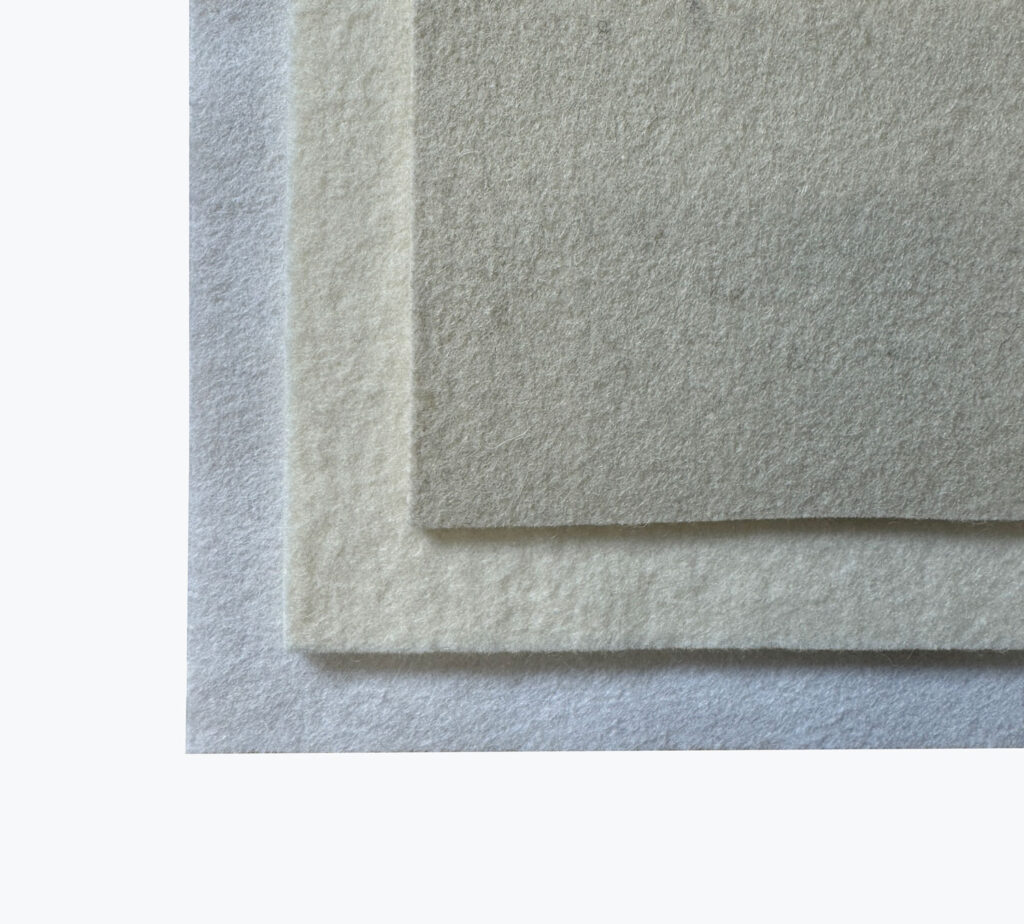
Using a full set of printmaking blankets isn’t just recommended, it’s what allows your press to perform the way it’s designed to.
Each blanket has a specific role, and when they’re used together, they create the right balance of pressure, flexibility, and support. Without all three layers, pressure can become uneven, leading to loss of detail, inconsistent impressions, or even damage to your plate and paper.
A complete set also helps the press apply pressure more gradually and evenly. Instead of forcing everything through at once, the blankets work together to cushion and distribute force, which is especially important for detailed intaglio work.
Conrad Printmaking Felt Sizes
Ooooooh the Possibilities.
Every Conrad felt blanket set is cut to match the exact size of your press bed, so you get a proper fit right out of the box.
Instead of oversized or generic blankets, each piece is trimmed to the correct dimensions. This ensures the blankets track smoothly through the press, stay aligned, and don’t bunch up or hang over the edges.
A proper fit also helps maintain even pressure across the entire bed, which leads to more consistent prints and easier operation.

Get Conrad Printmaking Felt Blankets
There’s never been
a better time to print.
The right blankets make all the difference. Upgrade your setup with Conrad printmaking felt blankets and get smoother pressure, cleaner impressions, and more consistent results.
Choose your custom size and complete your set today.
Shop Conrad Printmaking Felts NowWhat Are Printmaking Felt Blankets?
Printmaking felt blankets are thick, specially designed layers of wool or synthetic material used in printmaking presses—especially in intaglio processes like etching, engraving, and drypoint. These blankets are placed over the printing paper and plate before running them through the press. Their primary function is to distribute pressure evenly and help push the paper into the recessed lines of the plate, ensuring a clean, detailed print.
Although they may seem like simple pieces of fabric, felt blankets play a critical role in achieving professional print results.
The Purpose of Printmaking Felt Blankets
The main purpose of printmaking felt blankets is to act as a cushion and pressure distributor during the printing process. When a plate and paper pass through the rollers of a press, a tremendous amount of force is applied. The blankets help manage that force in several ways:
- Even Pressure Distribution: Prevents uneven printing or missed areas
- Paper Compression: Pushes the paper into etched or engraved lines
- Surface Protection: Protects both the plate and the paper from damage
- Shock Absorption: Reduces the impact of heavy rollers
By controlling how pressure is applied, felt blankets ensure that every detail of the image transfers accurately.
Types of Printmaking Felt Blankets
Printmaking blankets are typically used in a set of three, each with a specific role:
Pusher Blanket (Top Blanket)
This is the thickest and toughest blanket. It absorbs pressure, protects the other blankets, and helps push the paper deeply into the plate’s grooves.
Cushion Blanket (Middle Blanket)
The thickest blanket that distributes pressure more evenly across the surface.
Sizing Catcher (Bottom Blanket)
The thinnest and smoothest layer, placed closest to the plate. It provides a consistent base and protects the printing surface.
Together, these blankets create a system that balances pressure, flexibility, and protection.
Materials Used in Printmaking Blankets
Most traditional printmaking blankets are made from woven wool felt, prized for its durability, flexibility, and ability to compress under pressure. Wool fibers naturally interlock, creating a dense yet resilient material that can withstand repeated use.
Some modern blankets incorporate synthetic fibers, which can improve consistency and reduce wear. However, many artists still prefer wool for its superior performance in fine art printmaking.
Key material qualities include:
- Elasticity: Allows the blanket to compress and rebound
- Durability: Withstands repeated passes through the press
- Texture: Provides the right balance of grip and smoothness
The choice of material can significantly affect the final print quality.
How Felt Blankets Are Used in Printmaking
Using felt blankets correctly is essential for successful printing. The typical process involves:
1. Preparing the Plate and Paper
The plate is inked and wiped, and the paper is dampened (for intaglio).
2. Layering the Setup
The plate is placed on the press bed, followed by the paper. The felt blankets are then laid on top in the correct order.
3. Running the Press
The entire stack passes through the rollers. The blankets compress, applying even pressure.
4. Removing the Blankets
After printing, the blankets are lifted carefully to reveal the print.
Proper alignment and handling of the blankets are crucial to avoid smudging or uneven prints.
Printing Styles That Use Felt Blankets
Felt blankets are most commonly associated with intaglio printing techniques, including: etching, engraving, drypoint, and aquatint printing.
In contrast, relief printing (like woodcut) and lithography often use little to no blanket pressure, depending on the setup.
Care and Maintenance of Felt Blankets
To maintain their effectiveness, felt blankets require proper care:
- Keep Them Clean: Remove ink and debris regularly
- Store Flat or Rolled: Avoid folding, which can create creases
- Air Them Out: Prevent moisture buildup and mold
- Don’t leave them under pressure
With proper care, high-quality blankets can last for many years.
Common Issues and Solutions
Printmakers may encounter problems related to blankets:
- Uneven Pressure: Caused by worn or misaligned blankets
- Marks on Prints: From debris trapped in the felt
- Reduced Detail: Due to compressed or worn-out blankets
Replacing or adjusting blankets often resolves these issues quickly.
Why Printmaking Felt Blankets Matter
Felt blankets are essential because they directly influence the quality of the final print. They ensure that pressure is applied evenly and that the paper fully engages with the plate. Without them, even the most carefully prepared plate may fail to produce a clear image.
They also protect expensive equipment and materials, acting as a buffer between the press and the artwork.
Frequently Asked Questions
What do printmaking felt blankets do?
They distribute pressure evenly and help push paper into the grooves of a printing plate, ensuring a clear image transfer.
Are all printmaking blankets the same?
No, they vary in thickness and density, and are typically used in sets of three with different functions.
Can you print without felt blankets?
For intaglio printing, blankets are essential. Some other techniques may not require them.
How long do printmaking blankets last?
With proper care, they can last for many years, depending on usage.
What are printmaking blankets made of?
They are usually made from wool felt, though some modern versions include synthetic materials.
